Science and Technology Research Partnership
for Sustainable Development

Font size
- A
- A
- A



Development of the Sustainable and Diversified Rice Farming System by Reflecting the Importance of Forest Functions
Bioresources
 Republic of Madagascar
Development of the Sustainable and Diversified Rice Farming System by Reflecting the Importance of Forest Functions
Brighten the future of African agriculture with synergy between food production and forest conservation!

Principal Investigator
-


Dr
Crop, Livestock and Environment Division, Japan International Research Center for Agricultural Sciences
TSUJIMOTO Yasuhiro

Director of Crop Production Support,
Ministry of Agriculture and Livestock
Lovaniaina RAKOTONDRANAIVO
ODA Recipient Country
Republic of Madagascar
Research Institutions in Japan
Japan International Research Center for Agricultural Sciences, The University of Tokyo, Kyoto University, University of Tsukuba, University of Yamanashi, Forestry and Forest Products Research Institute
Research Institutions in Counterpart Country
Ministry of Agriculture and Livestock, Ministry of Environment and Sustainable Development , National Nutrition Office , University of Antananarivo , National Center for Applied Research in Rural Development , National Environment Research Center
Adoption fiscal year
FY2024
Research Period
5Years
Overview of the Research Project
Simultaneously providing production stabilization technologies and scientific evidence in support of forest functions
In Madagascar, the problems of rural poverty and forest loss due to the expansion of farmland are growing increasingly serious. Under this project, innovative technologies will be developed to increase the productivity and crop diversity of paddy fields, the main form of agricultural land in Madagascar, while also quantifying forest functions that support paddy field production. By reflecting the technologies and scientific findings obtained during the project in extension activities and policies, the project aims to halt the negative cycle of unstable food production and degraded watershed environments, and to facilitate the shift to a sustainable food production system.
The presentation of a role model that simultaneously contributes to the solution of Africa's food and environmental challenges
By focusing on rural areas in Africa, where the problems of unstable food production and environmental impacts are most apparent, and by presenting concrete practical examples of simultaneous solutions, the project will contribute to poverty reduction, improved nutrition, and sustainable agriculture in Africa by spreading similar approaches both within Madagascar and abroad
Photo gallery

Examples of upstream forest loss and downstream sediment influx into rice paddies seen in northwestern Madagascar

Development of cultivation technology that increases paddy rice yield while reducing chemical fertilizers and GHGs

Development of technology to increase vegetable and legume production using microorganisms

Assessment of water and nutrient cycles in the watershed
Research Project Web site
Press Release
Links
Projects
Contact Us
Japan Science and Technology Agency (JST)
Department of International Affairs
SATREPS Group
TEL : +81-3-5214-8085


Related articles by Category
- Bioresources
Bioresources
 Republic of Indonesia
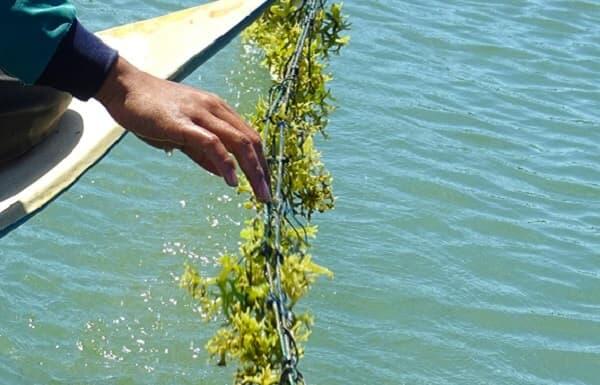
Promoting the blue economy by utilizing seaweed resources!
Development of Sustainable Seaweed Based Functional Products for Promoting Blue Economy
- Madagascar
Bioresources

- Republic of Madagascar
Challenges for Rice production with limited soil nutrients - Endeavor to increase yield under harsh conditions
Breakthrough in Nutrient Use Efficiency for Rice by Genetic Improvement and Fertility Sensing Techniques in Africa
- Africa
Environment / Energy
(Global-scale environmental issues)
 Arab Republic of Egypt
Contributing to the reduction of marine plastic litter and the establishment of a circular economy!
Utilization of Agricultural Wastes for Plastic Alternatives Productions to Establish a Circular Economy
- SDGs : Goal.2
Bioresources
- Republic of Indonesia
Achieve sustainable vegetable production in tropical regions using advanced breeding technology!
Breeding Innovation in Chili Pepper and Tomato to Accelerate Sustainable Vegetable Production in Tropical Regions