
-
Find JST Program
Enter Your Search Term
News
-

October 14, 2026
- Lattice Parameter as a Unified Parameter Governing Magnetic Ground States in Tsai-Type Compounds
- Researchers identify the lattice parameter as a unified structural descriptor for magnetic ground state selection in Tsai-type quasicrystals and approximant crystals
In materials chemistry, identifying common parameters that can organize magnetic ground states across complex …
-
October 14, 2026
- How a Path-Tracing Method Could Help Train Next-Generation Event Cameras
- The method generates realistic event camera data from virtual 3D scenes efficiently for applications such as autonomous driving and robotics
To simulate event cameras, which can capture brightness changes at microsecond-scale speeds, conventional methods …
-
October 14, 2026
- A Tert-Alkyl Terephthalate Derivative as a Universal Degradable Unit for Condensation Polymers
- Incorporating cleavable triggers into the backbones of parent polymers enables programmed degradation, offering a pathway to chemically recyclable plastics. Although various triggers have been reported to date, simple esters bearing a C─O bond cleavable by photocatalytic reactions have not been successfully employed as triggers. This is because the C─O bond …
-

October 13, 2026
- JST and NAFOSTED sign a Memorandum of Cooperation (MoC) on joint research funding
- On Sunday, October 4, 2026, the Japan Science and Technology Agency (JST), represented by President HASHIMOTO Kazuhito, and the National Foundation for Science and Technology Development of Vietnam (NAFOSTED), represented by Director Prof. Dr. DAO Ngoc Chien, signed a Memorandum of Cooperation (MoC) on joint research funding in Kyoto, Japan. …
-

August 21, 2026
- Showcasing International Research Collaboration and the Next Generation of Researchers ―JST ASPIRE Biotechnology Symposium at IBS2026―
- On 29–30 June 2026, JST hosted the ASPIRE Biotechnology Symposium, titled “Connect, Collaborate, Innovate: Global Partnerships in Biotechnology through ASPIRE,” at the 20th International Biotechnology Symposium and …
-

August 06, 2026
- ASPIRE Holds Kickoff and Annual Briefing for the Materials Field
- On May 11-12, 2026, the Japan Science and Technology Agency (JST) held a kickoff meeting at its Tokyo Headquarters for the five newly selected projects for FY2025, together with an annual briefing for the 13 ongoing projects in the Materials field under the Adopting Sustainable Partnerships for Innovative Research Ecosystem (ASPIRE). …
-
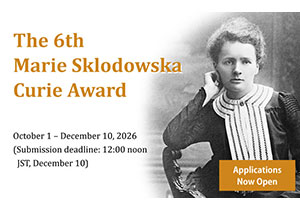
October 01, 2026
- Applications for the 6th Marie Sklodowska Curie Award are now open
[Closing date]December 10, 2026,12:00 (JST) - Applications for the 6th Marie Sklodowska Curie Award are open from Oct. 1 to Dec. 10, 2026. Self-nominations and nominations by others are accepted.
- Applications for the 6th Marie Sklodowska Curie Award are now open
-

August 17, 2026
- FY2027 SATREPS - Invitation for Research Proposals -
[Closing date]October 19, 2026 - The SATREPS program is promoting international joint research with the goal of resolving global issues as one aspect of "science and technology diplomacy," which connects science and technology with diplomacy for the mutual advancement of both.
- FY2027 SATREPS - Invitation for Research Proposals -
-

June 24, 2026
- SICORP Japan-Canada Joint Research Call for AI and Automation solutions to enhance Agricultural productivity and resilience
[Closing date]November 30, 2026 - JST and NRC, in order to promote international research interaction and exchange among researchers in Japan and Canada, are jointly accepting proposals for Japanese-Canadian collaborative research projects.
- SICORP Japan-Canada Joint Research Call for AI and Automation solutions to enhance Agricultural productivity and resilience
Others
Overseas Branch Offices
The JST overseas offices are strategically located to capture the latest science and technology trends in their respective regions, actively promote the global activities of JST-funded Japanese researchers and leverage global networks to enhance and internationalize Japan's S&T.
-
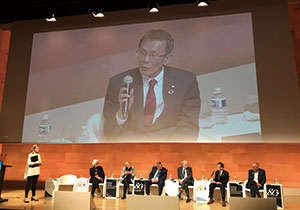
Paris Office
We are JST's first-established overseas office, responsible for a wide range of countries within Europe and Africa. We negotiate and coordinate with relevant organizations and support the growth of JST's European operations, where science cooperation is often multi-layered and complex. We also play a vital role in transmitting local information back to JST headquarters, and are actively expanding our network of related organizations in order to improve Japan's S&T presence in Europe.
-
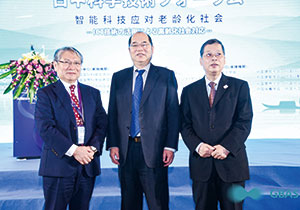
Beijing Office
The Beijing office communicates with Chinese government agencies in the coordination of international joint research programs, and supports activities such as the Japan-China University Fair & Forum and "Japan Window" - a website and public social media account providing information about Japan in Chinese language. We cooperate to hold the China-Japan Science and Technology Forum, and work to enhance JST's presence by participating in central and local government events.
-
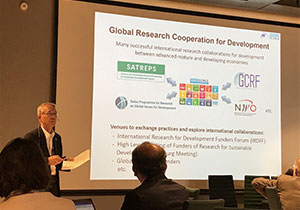
Washington D.C. Office
At the Washington, DC Office our mission is to strengthen scientific cooperation between JST and our counterpart organizations, between JST and local scientists and researchers, as well as to study and analyze STI policies and R&D trends in the US. The office has also helped support various scientific collaborative arrangements with other countries in the Americas.
-
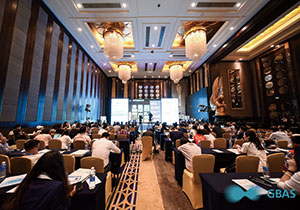
Singapore Office
South and Southeast Asia, home to more than 2 billion people, have achieved remarkable growth in recent years. Located among areas of diverse culture and history, the Singapore office strives to connect Japanese universities, research institutes and companies with these areas for the promotion of JST's operations in Asia. We are actively promoting student exchange program Sakura Science in addition to collaborative research programs offered by JST including e-ASIA, SATREPS, and CHIRP.