Science and Technology Research Partnership
for Sustainable Development

Font size
- A
- A
- A



Searching Lead Compounds of Anti-malarial and Anti-amebic Agents by Utilizing Diversity of Indonesian Bio-resources
Infectious Diseases Control
 Republic of Indonesia
Searching Lead Compounds of Anti-malarial and Anti-amebic Agents by Utilizing Diversity of Indonesian Bio-resources
Screening a Wide Range of Microbial Resources for Effective Anti-parasitic Compounds

Principal Investigator
-


Prof.
Graduate School of Medicine and Faculty of Medicine, The University of Tokyo
NOZAKI Tomoyoshi

Prof.
Deputy Chairperson, The Agency for the Assessment and Application of Technology (BPPT)
Eniya Listiani Dewi
ODA Recipient Country
Republic of Indonesia
Research Institutions in Japan
The University of Tokyo / Kitasato University / Nagasaki University / MicroBiopharm Japan Co., Ltd.
Research Institutions in Counterpart Country
The Agency for the Assessment and Application of Technology (BPPT)
Adoption fiscal year
FY 2014
Research Period
5 Years
Overview of the Research Project
Plants, microbes, and other organisms are important resources for drug discovery
Indonesia is a nation rich in biological resources. As substances found in plants and microorganisms have the potential to be used as drugs, these biological resources are highly valuable in drug discovery. The aim of this project is to screen Indonesia’s diverse microbial resources for compounds that might be candidates for drugs to treat malaria and amebiasis. There are no vaccines against these parasitic diseases, and drug treatments are also limited, meaning that new drugs are needed. Technical assistance provided through the project will also enable Indonesia to develop the capability for independent drug discovery research.
Potential for drug discovery in Japan as well as in Indonesia
If compounds that are potential candidates for new drugs are identified, researchers will collaborate with corporations with the aim of their commercialization. If Indonesia becomes capable of developing therapeutic drugs for itself, this will lead to its further economic development. Ensuring that
Indonesian biological resources can also be utilized in Japan also enhances Japan’s potential for drug discovery research.
Photo gallery
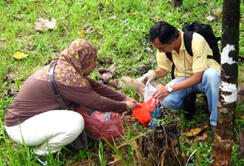
Soil collection on the island of Saparua, Maluku Province
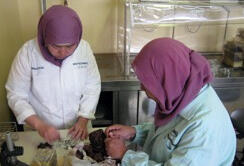
Preprocessing for the isolation of microorganisms from collected soil
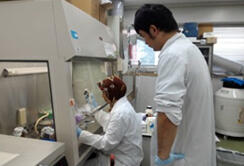
Instruction on enzyme activity assay for the malaria parasite
Research Project Web site
Press Release
Links
Projects
Contact Us
Japan Science and Technology Agency (JST)
Department of International Affairs
SATREPS Group
TEL : +81-3-5214-8085


Related articles by Category
- Infectious Diseases Control
Infectious Diseases Control
 Kingdom of Thailand
Helping Tuberculosis Patients: Strengthening TB Control Strategies through Genomic Analysis!
Integrative Application of Human and Pathogen Genomic Information for Tuberculosis Control
- Indonesia
Environment / Energy
(Carbon Neutrality)
- Republic of Indonesia
Creating a new chemical industry linked to Indonesian agriculture!
Development of Integrated Bio-circular Economy from Food and Energy Estate Waste Fraction to Biofuel and Bio-chemicals
- Asia
Environment / Energy
(Global-scale environmental issues)
- Kingdom of Thailand
“Natural rubber seeds”, the unlimited potential hiding in natural rubber plantations
Utilization Technology of Rubber Seeds for Green Products to Mitigate Global Warming and Plastic Pollution
- SDGs : Goal.3
Environment / Energy
(Global-scale environmental issues)
 Kingdom of Cambodia
Develop human resources to solve air pollution problems in Cambodia! Observation, analysis then countermeasures
Establishment of Risk Management Platform for Air Pollution in Cambodia