Progress Report
The Realization of an Avatar-Symbiotic Society where Everyone can Perform Active Roles without Constraint[8] Avatar Social Ethics Design
Progress until FY2024
1. Outline of the project
We are addressing ethical and legal issues related to the use of cybernetic avatars (CAs) and working toward the realization of moral computing. Discussing and proposing the social ethics of CA usage from a broad perspective is essential for the future development and widespread adoption of CAs in society. To this end, researchers in ethics, law, and engineering are collaborating to deepen the discourse on CA social ethics.
In the engineering-oriented research, we are developing moral computing technologies that can automatically convert inappropriate user behaviors into appropriate ones through the CA's functionalities. We are also studying behavior generation methods for CAs that enhance hospitality while considering cultural adaptability.
In the area of social ethics, we examine the potential social, ethical, and psychological impacts that may arise when CAs become prevalent in society. In the legal research, we explore issues such as avatar authentication systems, privacy concerns, and legal challenges related to the implementation of avatars in society.
2. Outcome so far
Proposing Avatar Social Implementation Guidelines
We have held domestic and international symposia, international workshops, and avatar moral experience workshops (Figure 1), engaging in in-depth discussions on designing CA social ethics with experts from a wide range of fields, including law, ethics, engineering, education, and science fiction writing. Based on the discussion, we proposed the Avatar Social Implementation Guidelines whose main point is as follows:
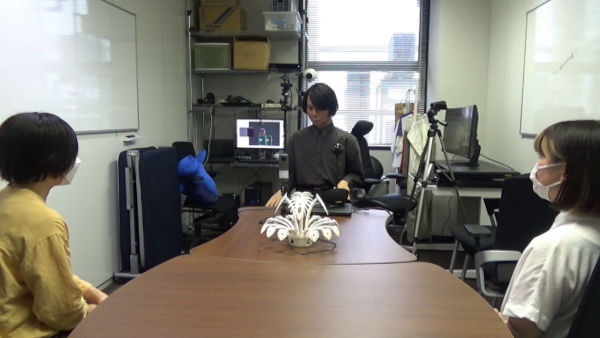
To enhance social well-being, it is essential to overcome the challenges associated with new technologies—such as concerns and trust issues (including legal and ethical matters)—while promoting their adoption in society.
[Consideration] Consideration must be given to both CA operators and end users.
[Dissemination] Key goals for the social adoption of CAs include: Ensuring equal access for everyone to opportunities to utilize Cas; improving the quality and productivity of services through CA use; and contributing to the realization of a sustainable society through the use of CAs.
Research on Moral Computing and Avatar Hospitality
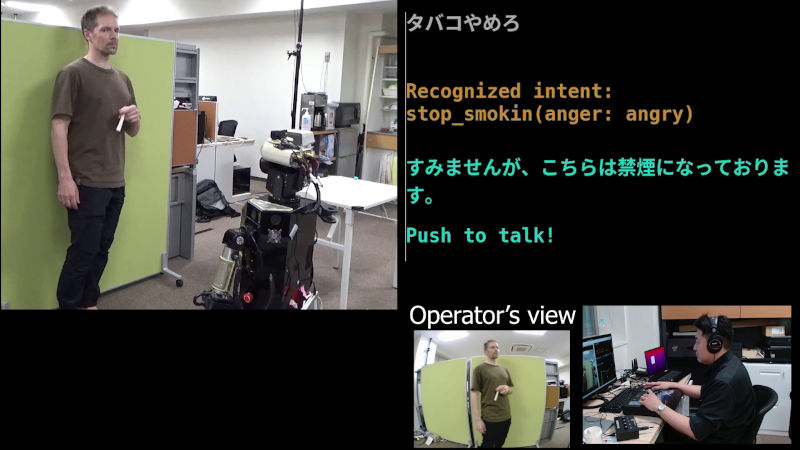
①Research on Moral Computing: We developed a technology that detects inappropriate speech by an operator and converts it into polite expressions before conveying it to the other party. This technology was shown to reduce the workload of CA operators. Additionally, we developed a method by which robots express warnings before a sudden stop, using head movements, body rotation, and gradual deceleration. In a shopping mall field study, this method significantly reduced the impact on passersby (Figure 2).
② Cross-Cultural Experiments on Interaction with CAs: We conducted field studies using CAs in locations such as dining facilities in a university and a science museum in the city in Spain. Additionally, we carried out cross-cultural comparison experiments between Japan and Sweden, focusing on interactions with humans, robots, and CG characters. The results revealed that in Japan, there is a greater sense of familiarity toward robots and CG characters, while there is also a tendency for them to follow human instructions more strictly.
Research on Social Ethics and Legal Issues
① Research on Social Ethics: We conducted public surveys on perceptions of avatar technology in Japan, the United States, and Spain. Across all countries, the most commonly cited concerns included "lending one’s avatar to others for impersonation," "using avatars to conceal absence," and "manipulating opinions using multiple avatars." Concerns about representation for race and religion were strongest in Japan, while gender stereotypes concerns were most pronounced in Spain. People in all three countries expressed positive expectations, such as "being able to become the person they aspire to be" and "enabling those with difficulty participating in society to do so through avatars."
② Examination of Legal Issues: 1) We discussed legal issues related to avatar impersonation and the misuse of avatars in virtual spaces from a privacy protection standpoint. 2) We proposed institutional measures for avatar authentication systems. 3) To identify challenges related to the use of CAs by individuals in special societal roles (e.g., public safety officers such as police officers), we conducted research into domestic and international legal regulations.
3. Future plans
- We will investigate cultural differences in perceptions of morality and hospitality, and work toward the development of culturally adaptive CAs.
- We will clarify the social, ethical, legal, and psychological issues associated with the adoption of avatars in society.