Science and Technology Research Partnership
for Sustainable Development

Font size
- A
- A
- A



Eco-technological Management of Tuvalu against Sea Level Rise
Environment / Energy (Climate Change)
 Tuvalu
Eco-technological Management of Tuvalu against Sea Level Rise
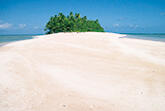
Protecting Tuvalu, Island of Beautiful Coral Reefs and Star Sand, from Sinking

Principal Investigator
-

Prof.
Graduate School of Science, The University of Tokyo
KAYANNE Hajime
ODA Recipient Country
Tuvalu
Research Institutions in Japan
The University of Tokyo / National Institute for Environmental Studies (NIES) / Ibaraki University / University of the Ryukyus
Research Institutions in Counterpart Country
Tuvalu’s Department of Environment / Deparment of Fisheries / Department of Lands and Survey
Adoption fiscal year
FY 2008
Research Period
5 Years
Overview of the Research Project
Rise in sea level and loss of creatures that produce sand
Tuvalu is at risk of submerging due to rising sea levels caused by the effects of climate change. The natural environment has been degraded by population increase and economic development, resulting in progressive deterioration of the coral reefs and a drop in the capacity of the ecosystem that creates the deposits that constitute Tuvalu’s native soil. As a result, there is a need to understand the mechanism that forms and maintains the island and consider the ecosystem, and then devise policies to increase the island’s restorative capabilities. These policies can be applied not only to Tuvalu but to atolls throughout the world, and to the islands off the coast of the Japanese mainland.
Development of technologies to aid coral and foraminifera propagation
A study of the topography, ecosystem etc. of Funafuti Atoll was conducted, and a map was prepared showing the distribution of coral and foraminifera and the production, transportation and sedimentation of sand by these organisms. In addition, experiments to raise and propagate foraminifera were conducted successfully. This study will aid in efforts to maintain the national territory while restoring the ecosystem, and in formulating measures to combat coastal erosion and coastal management plans.
Photo gallery
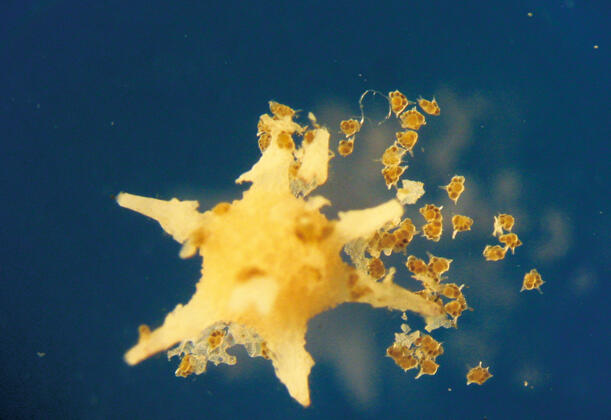
Asexual reproduction by foraminifera (common name: star sand)
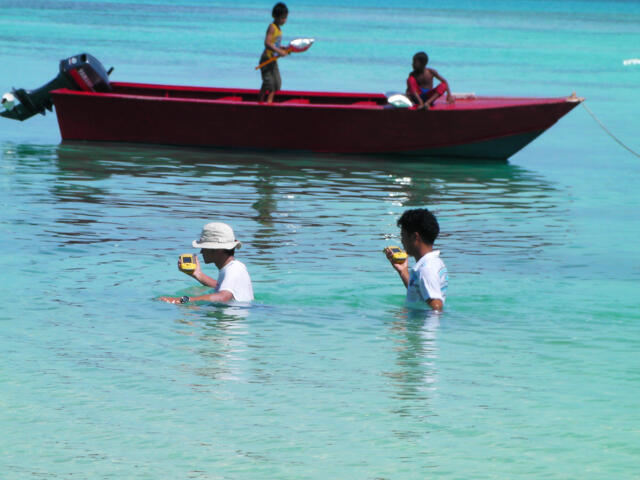
Surveying the topography of the shallow seafloor near the shoreline with GPS in hand. This was an enthusiastic collaborative effort by a young Japanese researcher and a Tuvalan counterpart, chest-deep in the sea.
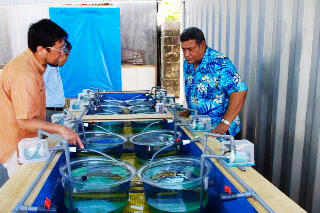
The Japanese principal investigator explained the system for multiplying the living foraminifera to the Prime Minister of Tuvalu.
Research Project Web site
Press Release

Links
Projects
Contact Us
Japan Science and Technology Agency (JST)
Department of International Affairs
SATREPS Group
TEL : +81-3-5214-8085


Related articles by Category
- Climate Change
Environment / Energy
(Climate Change)
 Federative Republic of Brazil
Health Checkup for the World’s Lungs: Measuring the Carbon Stocks in the Amazon Forests
Carbon Dynamics of Amazonian Forests
- Oceania
Environment / Energy
(Global-scale environmental issues)
 Republic of Palau
Ensuring the Future of Palau’s
Wonderful Coral Reefs
- a Paradise of Life in the
Pacific OceanSustainable Management of Coral Reef and Island Ecosystems: Responding to the Threat of Climate Change
- SDGs : Goal.13
Environment / Energy
(Carbon Neutrality)
 Republic of Indonesia
Healthy people, healthy world: Transforming CO2 with microalgae
Integrated Sustainable Energy and Food Production from Microalgae-based Carbon Capture and Utilization