Progress Report
Last updated:
Integration of Asian humanities and brain informatics to enhance peace and compassion of the mind[3] Social Implementation
Progress until FY2025
1. Outline of the project
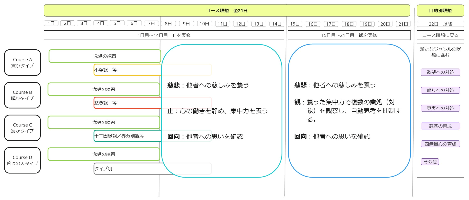
Based on Buddhist literature, we recorded guided meditation narrations and completed a prototype version of the app. We implemented a system that categorizes human personality types based on the "defilements" mentioned in Buddhist scriptures and assigns foundational meditation practices tailored to each type. This approach ensures that users can select meditation methods suited to their individual characteristics. To faithfully incorporate the insights derived from the literature survey, the app also includes video content for walking meditation. Furthermore, the system was designed to support large-scale intervention experiments involving several hundred participants. We have also finalized multiple meditation training programs, established an experimental design, and commenced large-scale experiments to collect and analyze scientific data.
2. Outcome so far
R&D 1: Buddhist Textual Survey and Meditation Design
- (1) Development of Meditation App Content
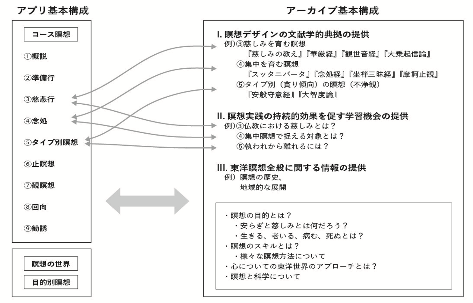
- The primary goal of the meditation app is to suppress automatic mental reactions (reactivity) through "awareness" (mindfulness) while simultaneously cultivating "loving-kindness". A key feature of the app is the creation of four distinct meditation courses tailored to specific personality types—Greed, Anger, Delusion, and Balanced—providing a structure and sequence rooted in traditional practices. We contributed to the completion of the prototype version. Furthermore, to achieve R&D goals such as alleviating "loneliness/anxiety" and fostering a "positive mindset," we integrated the app with the Oriental Meditation Archive.
- To enhance reliability and validate the efficacy of app-based meditation compared to in-person or Zoom-based sessions, we conducted three main experiments using biological data, digital biomarkers (DBM), and questionnaires. These included a six-week Zoom-based program, long-term measurements in a Zen monastery, and a one-week in-person retreat. In collaboration with Professor Kalisch and Dr. Puhlmann of the Leibniz Institute for Resilience Research (Germany), we began collecting and analyzing data on changes in facial expressions and interpersonal communication—indicators described in Buddhist texts as meditation outcomes. Additionally, to explore changes in brain states during meditation, we conducted pilot EEG measurements on an experienced monk.
- (2) Creation of a Meditation Literacy Archive Integrated with the App
- The Oriental Meditation Archive provides titles reflecting contemporary interests, offering commentaries alongside translations of original texts. In addition, we organized information on Taoist and Christian meditation practices related to Eastern views of humanity. The modern translations of the original texts are categorized in alignment with "Well-going" goals. By enriching the glossary, we aim to contribute to the improvement of users' meditation literacy.
R&D 2: Large-Scale Intervention Experiment
In this project, we implemented five meditation practice courses into our newly developed app, "MiruApp." These include four courses tailored to specific personality types and one modern applied practice course known as mindfulness. For comparison, we also included a control group that focused solely on measurements without meditation practice, testing the effectiveness across a total of six courses. By analyzing data from 562 participants, we evaluated the specific effects of each course, which revealed distinct outcomes in areas such as relaxation and well-being.
Furthermore, we conducted an analysis using a personality-typing algorithm developed by our data-driven modeling team. The results indicated a significant interaction between personality types and the effectiveness of specific courses, identifying which types of individuals benefit most from particular practices. However, several challenges remain, such as the fact that the number of participants to whom the typing algorithm could not be applied was higher than anticipated.
Regarding the one-week in-person retreat, we conducted physiological assessments, including the measurement of urinary hormones. The results revealed a significant correlation between the psychological benefits of the retreat and changes in oxytocin levels.
3. Future plans
Moving forward, we will further strengthen our collaboration with the Leibniz Institute for Resilience Research. We aim to synthesize our findings regarding the relationship between changes in psychological states or traits induced by meditation and corresponding changes in facial expressions and voice.
We plan to conduct another large-scale intervention experiment using MiruApp to address the challenges identified this year. Additionally, we will continue our physiological validations using indicators such as oxytocin.
Through these efforts, we will multifacetedly examine the impact of tailoring meditation practices to the individual. We also intend to advance the development of behavioral indicators to objectively measure the effects of meditation, laying the groundwork for further research.