


Soutaro Uemura
Development of AI-driven single-molecule nanopore techniques for biological samples
Grant No.:JPMJCR2231
Research Director : Soutaro Uemura

Professor
Faculty of Science
The University of Tokyo
Collaborator
| Tatsuhiko Tsunoda | Professor Faculty of Science The University of Tokyo |
|---|
Outline
The development of high-sensitivity, high-throughput comprehensive analysis technologies for proteins has significantly been delayed. Therefore, we are developing a system that integrates nanopore measurement and deep learning approaches to establish a single-molecule quantitative and comprehensive analysis system for target molecules from the biological samples. By using deep learning to learn the specific target molecules in advance in order to identify which pre-trained molecule each signal is attributed to, we will be able to perform comprehensive and quantitative analysis even in a biological sample such as blood.
Satoru Takahashi
Outstanding Evolution of Advanced Precision Measurement with the Aid of Metrology Standards and Information Science : Realization of 10nm super-resolution optical loupe
Grant No.:JPMJCR2232
Research Director : Satoru Takahashi
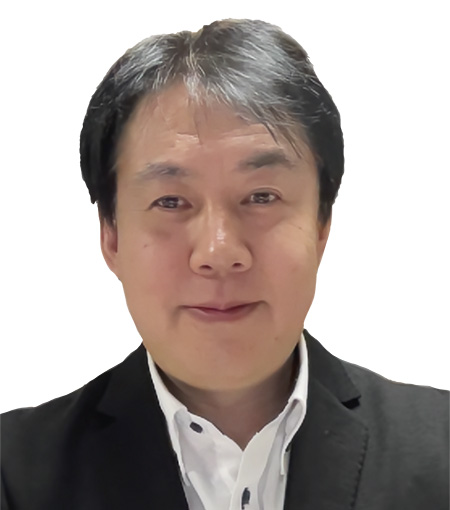
Professor
Graduate School of Engineering
The University of Tokyo
Collaborator
| Yutaka Ohtake | Professor Graduate School of Engineering The University of Tokyo |
|---|---|
| Yasunari Nagaike | Senior Director OLYMPUS CORPORATION |
| Ichiko Misumi | Leader, group Research Institute for Material and Chemical Measurement National Institute of Advanced Industrial Science and Technology |
Outline
The objective of this project is to develop a limit-breaking optical microscopy method that can greatly exceed the diffraction limit, which has been conventionally regarded as the physical limit of optical resolution, by integrating and deepening the state-of-the-art nano optical physics with the latest measurement standards and information science. Specifically, we aim to develop an innovative optical measurement and analysis technology that is not an extension of conventional physical principles, such as a growing and evolving optical loupe that can, in principle, achieve super-resolution of 10 nm and has the potential to develop into a global intelligent sensor in the future.
Yuki Takayama
Development of advanced lensless nano-CT system using coherent synchrotron X-rays
Grant No.:JPMJCR2233
Research Director : Yuki Takayama
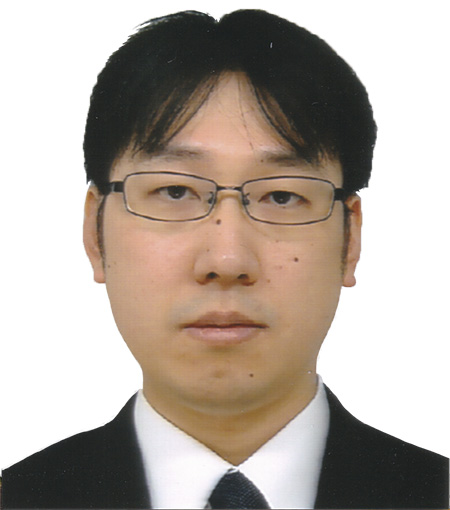
Associate Professor
International Center for Synchrotron Radiation Innovation Smart
Tohoku University
Collaborator
| Kohei Yatabe | Associate Professor Faculty of Engineering Tokyo University of Agriculture and Technology |
|---|---|
| Takashi Yoshidome | Associate Professor Graduate School of Engineering Tohoku University |
Outline
In this project, we develop an advanced nano-CT measurement and analysis system for both visualization and understanding of structure-function relationship in devices, materials, biological systems, etc. The nano-CT system is based on X-ray ptychography, a lensless imaging technique utilizing coherent synchrotron X-rays. X-ray ptychography has capability for in-situ / operando visualization of internal nanostructures of samples even if they are opaque to electron beams or transparent to X-rays. Our aim is to extend its observational limit by incorporating deep-learning approach to image reconstruction procedures. We will also develop a machine-learning-based analysis method for understanding of observed phenomena. Our developed system will be applied to practical targets important for solving social issues, and will contribute to innovations in industry.
Tomofumi Tada
Device inverse design by seamless determination and prediction of active surface/interface structures in operation from atomistic multi-scale modeling, artificial intelligence, and AC/DC-XPS measurement
Grant No.:JPMJCR2234
Research Director : Tomofumi Tada

Professor
Kyushu University Platform of Inter/Transdisciplinary Energy Research
Kyushu University
Collaborator
| Masaaki Araidai | Assistant Professor Institute of Materials and Systems for Sustainability Nagoya University |
|---|---|
| Masanori Tachikawa | Professor Graduate School of NanoBioScience Yokohama City University |
| Masateru Taniguchi | Professor The Institute of Scientific and Industrial Research The University of Osaka |
| Ryo Tamura | Group Leader Center for Basic Research on Materials National Institute for Materials Science |
Outline
In this project, the surface/interface structures between materials that determine the device performance is atomically identified in operation state as time-series data by means of multi-scale modeling, artificial intelligence, and newly developed AC/DC-XPS measurement system. The determined active surface/interface structures in operation are explicitly linked with device performance, and used to predict more active surface/interface structures by multi-scale inverse design. This is the newly proposed approach, “Device inverse design by seamless determination and prediction of active surface/interface structures in operation from atomistic multi-scale modeling, artificial intelligence, and AC/DC-XPS measurement”. We apply the device inverse design to electrochemical devices, and will create electrode materials that improve the performance of fuel cells.
Mizuki Tada
Reaction Remastering: The Frontier of Eco-Material Innovation
Grant No.:JPMJCR2235
Research Director : Mizuki Tada

Professor
Research Center for Materials Science
Nagoya University
Collaborator
| Yasuhiko Igarashi | Associate Professor Faculty of Engineering, Information and Systems University of Tsukuba |
|---|---|
| Hieu Chi Dam | Professor Co-creative Intelligence Research Area, School of Knowledge Science Japan Advanced Institute of Science and Technology |
| Hirosuke Matsui | Associate Professor School of Science Kwansei Gakuin University |
Outline
We will create the innovative measurement and analysis system “Reaction Remastering” by advanced operando X-ray spectroimaging and data-driven informatics approach and achieve the visualization of spatiotemporally-fluctuating reactions in functional materials that are difficult to be visualized clearly. The frontier of eco-material innovation will be developed through the practical use of big data and breakthrough generated by reaction remastering.
