


 CREST
CREST[Bio-DX] Year Started : 2023
Kiyoshi Asai
Optimal design of mRNA by deep generative models using biological information archive
Grant No.:JPMJCR23N1
Research Director
Kiyoshi Asai
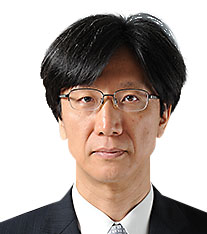
Professor
Graduate School of Frontier Sciences
The University of Tokyo
Collaborator
| Hiroshi Abe | Professor Graduate School of Science Nagoya University |
| Yutaka Saito | Professor School of Frontier Engineering Kitasato University |
| Kengo Sato | Professor School of Life Science and Technology Institute of Science Tokyo |
Outline
We will develop a technology to design mRNAs with desired performance from protein amino acid sequences by utilizing the archive of publicly available biological information and deep learning, and by using a DBTL cycle that greatly reduces the amount of experimentation. Proteins to be designed are selected from medical applications such as viral vaccines, cancer vaccines, gene editing, and protein replacement therapy. Effectiveness of the technology will be demonstrated by measurement of the performance of the designed mRNAs.
Kaoru Inokuchi
Functional analyses of the sleeping brain driven by multi-layered neural activity data
Grant No.:JPMJCR23N2
Research Director
Kaoru Inokuchi
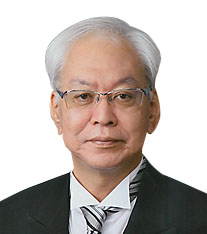
Professor
Graduate School
University of Toyama
Collaborator
| Taro Toyoizumi | Team Director Center for Brain Science RIKEN |
| Tatsuya Haga | Tenure-track researcher Advanced ICT Research Institute National Institute of Information and Communications Technology |
Outline
We aim to apply a large language model to the multi-layered, multi-dimensional data obtained from the brain during learning and sleep. This will lead to the development of a data analysis system that visualizes crucial neural activities during sleep. We will establish a feedback loop between experiments, data science, and mathematical models. This will uncover the mechanisms of information processing in both non-REM and REM sleep, shedding light on the brain’s learning processes during sleep. Additionally, we will propose functional hypotheses regarding sleep-related brain learning and construct mathematical models to implement them.
Hiroshi Ochiai
Understanding the mammalian cell fate regulation framework through multimodal spatiotemporal integrated omics analysis
Grant No.:JPMJCR23N3
Research Director
Hiroshi Ochiai
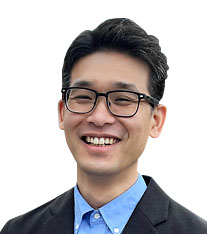
Professor
Medical Institute of Bioregulation
Kyushu University
Collaborator
| Soya Shinkai | Senior Scientist Center for Biosystems Dynamics Research RIKEN |
| Takuya Funatomi | Professor Academic Center for Computing and Media Studies Kyoto University |
| Kazumitsu Maehara | Associate Professor Faculty of Medical Sciences Kyushu University |
Outline
The process of mammalian development involves numerous stochastic and unknown factors, making a detailed understanding of the cell fate regulation mechanism challenging. In this research, we will target the early developmental stages of mice and organoids to analyze the cell-to-cell heterogeneity in gene expression, the epigenomic factors that regulate it, and intercellular interactions in a data-driven, multimodal, and spatiotemporal manner, elucidating the cell fate regulation mechanism.
Kumi Kuroda
Future childcare: Wearable AI solutions for infant sleep and crying
Grant No.:JPMJCR23N4
Research Director
Kumi Kuroda
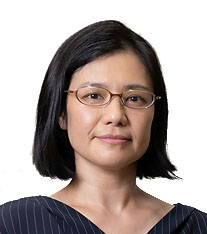
Professor
School of Life Science and Technology
Institute of Science Tokyo
Collaborator
| Nami Ohmura | Research Fellowship (RPD) Brain, Mind and KANSEI Sciences Reserch Center Hiroshima University |
| Natsue Yoshimura | Professor School of Computing Institute of Science Tokyo |
Outline
Excessive crying in infants can stress parents. In this research, we will develop a sleep-support wearable system that utilizes the transport response, in which the child becomes docile when carried. Then, from experimental data at home, we will construct a machine-learning model that estimates the infant’s probability of falling asleep after childcare activities from pulse wave information before the activities. From this model, we will evaluate the autonomic nervous system activities that control sleep onset and verify this model in physiological experiments on mice, to control infant night crying and predict sleep onset.
Hirokazu Toju
Multistability of microbiomes: multidisciplinary science for the optimization of ecosystem-level functions
Grant No.:JPMJCR23N5
Research Director
Hirokazu Toju
Professor
Graduate School of Biostudies
Kyoto University
Collaborator
| Kenta Suzuki | Research Scientist BioResource Research Center RIKEN |
| Masato Yamamichi | Associate Professor National Institute of Genetics Research Organization of Information and Systems |
Outline
We will establish techniques to overview the “multistability” of microbiomes from the perspective of ecosystem-level biological functions. In particular, we will focus on the phenomenon of rapid changes in species compositions, elucidating the biological and non-biological core factors driving the time-series dynamics of ecosystems based on the integration of causal inference and network science. Furthermore, we will construct experimental systems for plant- and fish-associated microbiomes, providing general technical frameworks for controlling ecosystem-level dynamics and functions in the medical, agricultural, and industrial fields
Hideto Mori
Automating DNA Design & Synthesis Using Conversational AI
Grant No.:JPMJCR23N6
Research Director
Hideto Mori
Specially Appointed Associate Professor
Premium Research Institute for Human Metaverse Medicine
The University of Osaka
Outline
Advancements in genome editing and synthetic biology have amplified the demand for DNA synthesis, underscoring the urgent need for more sophisticated automation in this field. However, adopting automated processes is constrained by the complexities of operating such systems and the absence of established protocols for sharing experimental procedures. In this study, we aim to address these challenges by developing a conversational AI agent that utilizes advanced large-scale language models to facilitate DNA design and synthesis automation.