


- JST Home
- /
- Strategic Basic Research Programs
- /
 CREST
CREST- /
- Research Director/
- Creation of an innovative quantum technology platform based on the advanced control of quantum states/
- [Quantum Technology] Year Started : 2017
[Quantum Technology] Year Started : 2017
Takao Aoki
Development of ultralow-loss nanofiber-cavity QED systems for scalable optical quantum computation
Research Director
Takao Aoki
Professor
Faculty of Science and Engineering
Waseda University
Collaborator
| Rina Kanamoto | Pofessor Faculty of Science and Engineering Meiji University |
Outline
We develop ultralow-loss nanofiber cavities that enables physical implementation of scalable quantum computation (fault-tolerant quantum computation) using photons, realize elementary technologies for optical quantum computation using nanofiber cavity QED systems, and theoretically optimize the architecture of the fault-tolerant optical quantum computation.
Fumihiko Kannari
Programmable large-scale quantum simulator using wavelength-division multiplexed optical modes
Research Director
Fumihiko Kannari
Professor
Faculty of Science and Technology
Keio University
Collaborator
| Masahiro Takeoka | Professor Faculty of Science and Technology Keio University |
Outline
A broad spectrum of femtosecond laser pulses can be considered as independently programmable massive frequency resources, where we can generate quantum correlation among the squeezed frequency modes over the wide spectral band using a classical pulse shaping technique. We achieve arbitrary quantum interference among the frequency modes in multi-step sum frequency generation and measure the photon number. This novel optical scheme based on time-frequency conversion can realize a programmable and compact large-scale quantum simulator.
Hideo Kosaka
Diamond quantum security
Research Director
Hideo Kosaka
Professor
Graduate School of Engineering
Yokohama National University
Collaborator
| Hiromitsu Kato | Chief Senior Researcher Advanced Power Electronics Research Center National Institute of Advanced Industrial Science and Technology |
| Tokuyuki Teraji | Chief Researcher Research Center for Functional Materials National Institute for Materials Science |
Outline
The targets of our research is to extend and multiply quantum communications via quantum repeaters and achieve high functionality via quantum authentication. We demonstrate heralded quantum teleportation transfer from a photon to a nuclear spin, fault-tolerant holonomic quantum gate with an electron and a nuclear spin, single-shot measurement of quantum entanglement between nuclear spins, and quantum authentication of carbon-isotope configuration via mechanical learning based on spontaneous entangled emission and absorption of a photon with an electron, toward the realization of quantum security.
Shiro Saito
Quantum sensing using superconducting flux qubits
Research Director
Shiro Saito
Senior Distinguished Researcher/Group Leader
NTT Basic Research Laboratories
Nippon Telegraph and Telephone Corporation
Collaborator
| Yukinori Ono | Professor Research Institute of Electronics Shizuoka University |
| Yasushi Kondo | Professor Faculty of Science and Engineering Kindai University |
Outline
Quantum sensing has recently attracted significant attention as a new application of quantum state control technologies. Here we will utilize superconducting flux qubits, known for their excellent controllability and scalability properties, as a high resolution quantum sensor. First, we plan to achieve electron spin resonance spectroscopy, with single spin sensitivity, by elongating the coherence time of the qubit. We will then realize high-sensitivity high-resolution quantum sensing of magnetic fields beyond the classical limit using superconducting flux qubits and hybrid devices with spin ensembles.
Kouichi Semba
Creation and control of superconducting quantum meta-materials
Research Director
Kouichi Semba
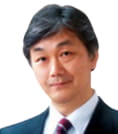
Exective Researcher
Advanced ICT Research Institute
National Institute of Information and Communications Technology
Collaborator
| Kazuki Koshino | Associate professor College of Liberal Arts and Sciences Tokyo Medical and Dental University |
Outline
This project aims at coherent control of superconducting quantum meta-material, the hybrid quantum system including generalized artificial molecules, the fast generation of non-classical microwave state and the in-situ control of quantum many body ground state. These quantum technologies are expected to be applicable to quantum metrology and quantum simulation. Particularly, it is important of better understanding unexplored physics of recently discovered deep strong coupling regime and making hybrid with new devices such as excellent coherence superconducting resonators and the Josephson pi-junctions.
Utako Tanaka
On-chip ion traps for integrated quantum systems
Research Director
Utako Tanaka

Associate Professor
Graduate School of Engineering Science
Osaka University
Collaborator
| Norihiko Sekine | Director Terahertz Technology Research Center National Institute of Information and Communications Technology |
| Kazuhiro Hayasaka | Associate Director Advanced ICT Research Institute National Institute of Information and Communications Technology |
Outline
Ion trapping is a technique that storages atomic ions in a vacuum system for a long period, which enables precise quantum-state manipulation. This research aims to integrate quantum systems by introducing microfabrication techniques to the ion trap electrodes. We will develop an optical clock based on such on-chip ion traps, which will contribute to the improvement of optical communications and precise measurements. We will also generate a variety of configurations of ions which is realized only by the on-chip ion traps, and aim to create novel systems such as superradiant lasers.
Masaaki Tanaka
Ferromagnetic quantum heterostructures: Creation of functional properties and spintronics device applications
Research Director
Masaaki Tanaka
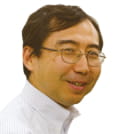
Professor
Graduate School of Engineering
The University of Tokyo
Collaborator
| Nam Hai Pham | Associate Professor School of Engineering Tokyo Institute of Technology |
Outline
We aim to create materials and devices with functions of non-volatility, low-power consumption, reconfigurability, flexible information processing, and/or non-reciprocality. We introduce magnetic elements and ferromagnetic materials into semiconductor materials, their quantum heterostructure/nanostructures, and device structures, control their quantum size effects, tunnel effects, charge/spin transport, and spin states, design and fabricate new functional materials and low-power spin devices.